In most B2B service, installation, and software firms, the moment a prospect asks for a proposal is where context fractures. A salesperson copies scope from an older document, edits pricing in a spreadsheet, asks a manager for a discount override in chat, exports a PDF, and leaves finance to re-key terms after signature. Building quote-to-cash inside a custom AI CRM with MCP keeps the entire lifecycle on one relational record: application code owns deterministic pricing math, while AI assists with scope drafting, follow-ups, and clean handoffs.
Illustrative synthetic scenario: the examples in this guide describe engineering patterns for custom quote-to-cash CRM systems and do not represent live customer records, measured metrics, or legal advice.
Where disconnected quoting breaks between sales, signatures and finance
Generic SaaS CRMs provide a "Proposal Sent" column, yet they rarely model a company's commercial logic. Once quotes combine tiered site pricing, one-time onboarding fees alongside recurring retainers, or optional modules, teams bolt on a quoting plugin, a standalone e-signature tool, and manual accounting re-entry.
That patchwork creates silent mismatches: signed scope prose drifts from CRM line items, revised quotes circulate alongside outdated links, or finance receives a flattened PDF with unclear payment triggers. Delays happen right when the buyer is ready to commit.
Static files and manual re-keying. Scope lives in copied documents, discount approvals hide in chat threads, and finance decodes signed PDFs into billing records.
Code owns math; AI handles context. Relational line items enforce pricing rules, AI drafts scope from calls, e-signatures lock a snapshot, and billing sync stages drafts.
Keep deterministic pricing rules in code, not in an AI prompt
The foundational rule of AI-assisted quoting is separating arithmetic and policy enforcement from language generation. A language model excels at summarizing discovery calls, catching open requirements from WhatsApp or email threads, and drafting clear scope descriptions. It must never compute discounts, enforce margin floors, apply tax rules, or decide bundle eligibility.
When building custom business software and product systems, the catalog, unit tiers, deposit ratios, and totals live in pure server-side functions backed by Postgres tables. Following our custom AI CRM and MCP pattern, the assistant calls scoped read tools for catalog rules and account history, and draft tools to suggest structured line items. Server code always computes the authoritative totals, so reps, buyers, and finance see one verified source.
Language models can mis-sum multi-line tiers or soften discount limits when prompted persuasively. Keep every pricing calculation and approval gate in unit-tested server code.
Updating line items behind an active URL breaks alignment between what the buyer read and what was recorded. Revisions must create a new version and void the old link.
Illustrative scenario: from discovery call to signed quote and billing draft
Consider a synthetic scenario for a B2B IT services company running multi-site deals in a custom CRM. After a scoping call and WhatsApp exchange, an account manager needs to quote network and security rollout for a clinic group across three active locations plus a conditional fourth site opening later in the quarter.
Rather than starting from a blank page, the rep runs the CRM proposal assistant. Using read-only MCP tools, it pulls the call summary and linked WhatsApp notes, proposes line items separating the three immediate sites from the conditional branch addendum, and drafts concise assumptions tied back to the buyer's requests. Server pricing code calculates setup and recurring tiers, applies the standard deposit rule, and flags the deferred site clause for review.
Decision checkpoint: what happens when a rep requests an extra discount or split deposit?
When server pricing validation detects a discount beyond the rep's role limit or reduced deposit terms, signature-link creation stays blocked. The draft routes to an internal approval card showing the exact delta and cited call notes for one-click sign-off.
Connecting follow-ups and digital signatures without losing deal state
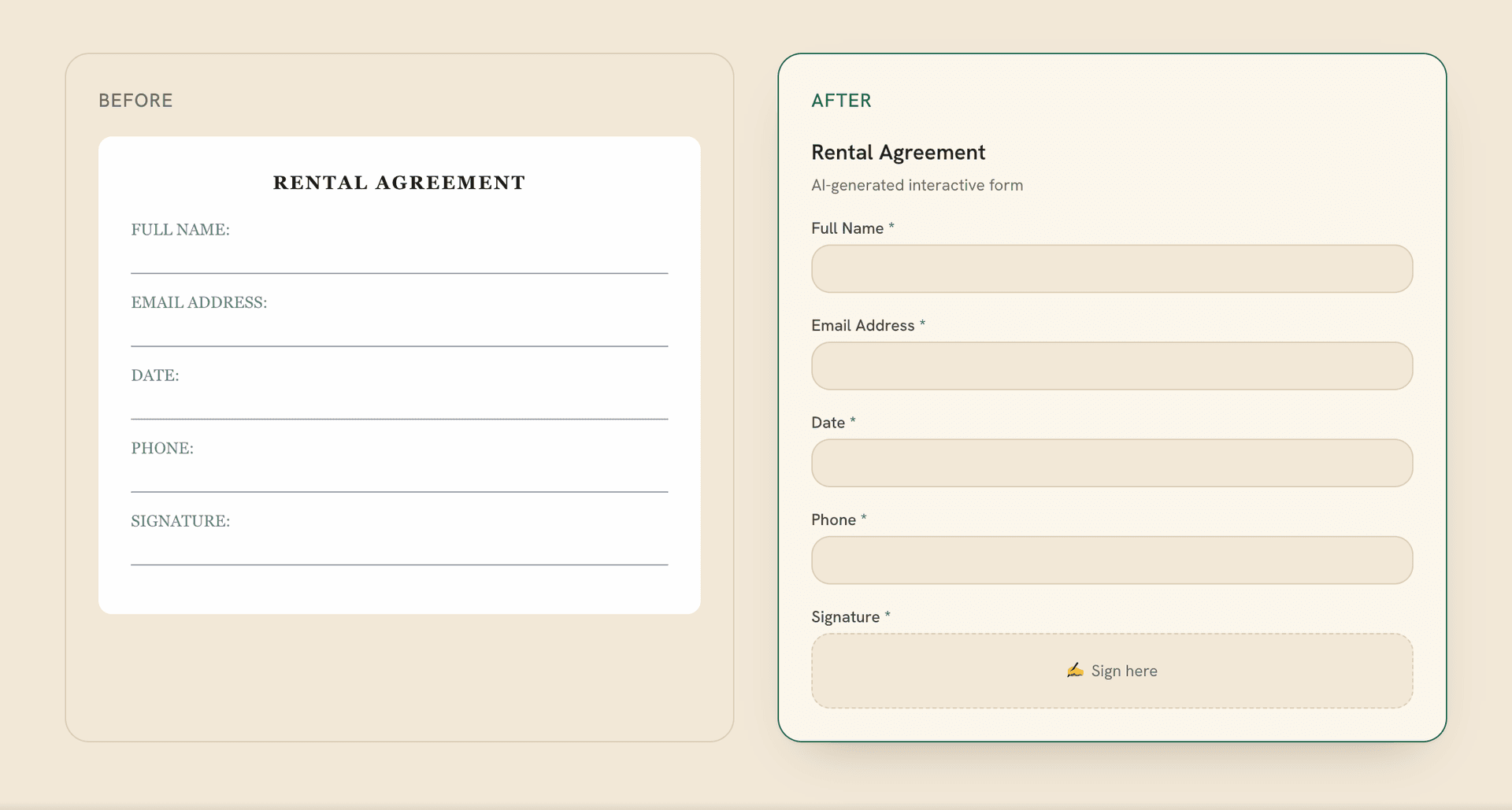
After internal sign-off, the proposal reaches the buyer as a structured interactive workflow rather than a static attachment. In the pattern used by Formalingo for forms, agreements and signatures, an agreement supports clear sections, conditional options, individual recipient links, and multi-signer tracking.
As covered in the Formalingo forms and signatures walkthrough and Formalingo build overview, an OpenAPI 3.1 REST API and HMAC-signed webhooks feed signature events directly into the CRM deal timeline:
- Immutable signed snapshots: Generating a signature link freezes line items, payment milestones, and scope prose into a locked snapshot unaffected by later catalog updates.
- Multi-signer visibility: When a deal needs both an operational lead and a finance approver, the CRM shows opens and individual signatures before delivery begins.
- Human-approved AI follow-ups: If an opened quote stalls, the assistant drafts a concise follow-up referencing pending sections, waiting for the rep's click before sending.
- Clean version superseding: Buyer-requested scope changes clone the quote into a new version, preserve an internal diff, and expire the superseded link automatically.
Clean accounting handoff and idempotent billing sync
Signature collection starts delivery and billing. The common integration bug here is letting a signature webhook post final ledger invoices directly, or allowing retried webhooks to create duplicate payment requests.
A reliable billing handoff keeps the CRM as the commercial record while leaving ledger posting with finance:
- Verify and deduplicate webhook events: Validate HMAC signatures and enforce a unique quote-version idempotency key so retries never duplicate billing steps.
- Generate explicit billing milestones: Split the signed snapshot into structured schedule entries such as kickoff deposits, delivery balances, or monthly renewals.
- Capture invoicing details inline: Collect tax IDs, billing addresses, and accounts-payable contacts before the handoff reaches accounting.
- Stage draft orders in accounting: Push mapped item codes, quantities, and approved terms as a draft sales order or invoice for finance review.
- Mirror read-only payment status in CRM: Surface invoice states and overdue flags inside the account timeline without giving sales write access to the ledger.
Engineering checklist before shipping
- Normalized Postgres line items: Store item IDs, quantities, tax categories, and discount rules relationally rather than inside free-form prose.
- Server-enforced approval thresholds: Validate margin floors and non-standard payment terms in backend code with audited approvals.
- Source-linked AI scope drafts: Link drafted assumptions back to call notes or message IDs so reps verify commitments in seconds.
- Scoped finance boundary: Stage idempotent billing drafts from locked quote versions while leaving final ledger posting with accounting.
A strong quoting workflow is measured by how cleanly a signed commitment becomes billable delivery.
Keeping pricing math in deterministic code, using AI for context and reviewable drafts, and connecting e-signatures to an idempotent billing handoff removes manual re-entry across sales, delivery, and finance.