Scheduling meetings and service appointments over WhatsApp is one of the highest-leverage workflows for customer-facing businesses. Yet it is also where naive chatbots fail most visibly: double-booking slots, ignoring travel buffers, losing context when customers change their mind mid-sentence, and trapping frustrated clients in automated dead ends.
Illustrative scenario: the architectural walkthroughs in this guide describe design patterns for business WhatsApp AI agents and do not represent a specific customer deployment or calendar availability guarantee.
Why Naive Chatbots Break on Real-World Calendar Logic
The standard chatbot approach assumes scheduling is a simple linear dialogue: an LLM reads calendar availability, presents three text choices to the user, parses a natural-language response, and inserts an event. In real operational settings, this naive architecture creates severe reliability bugs:
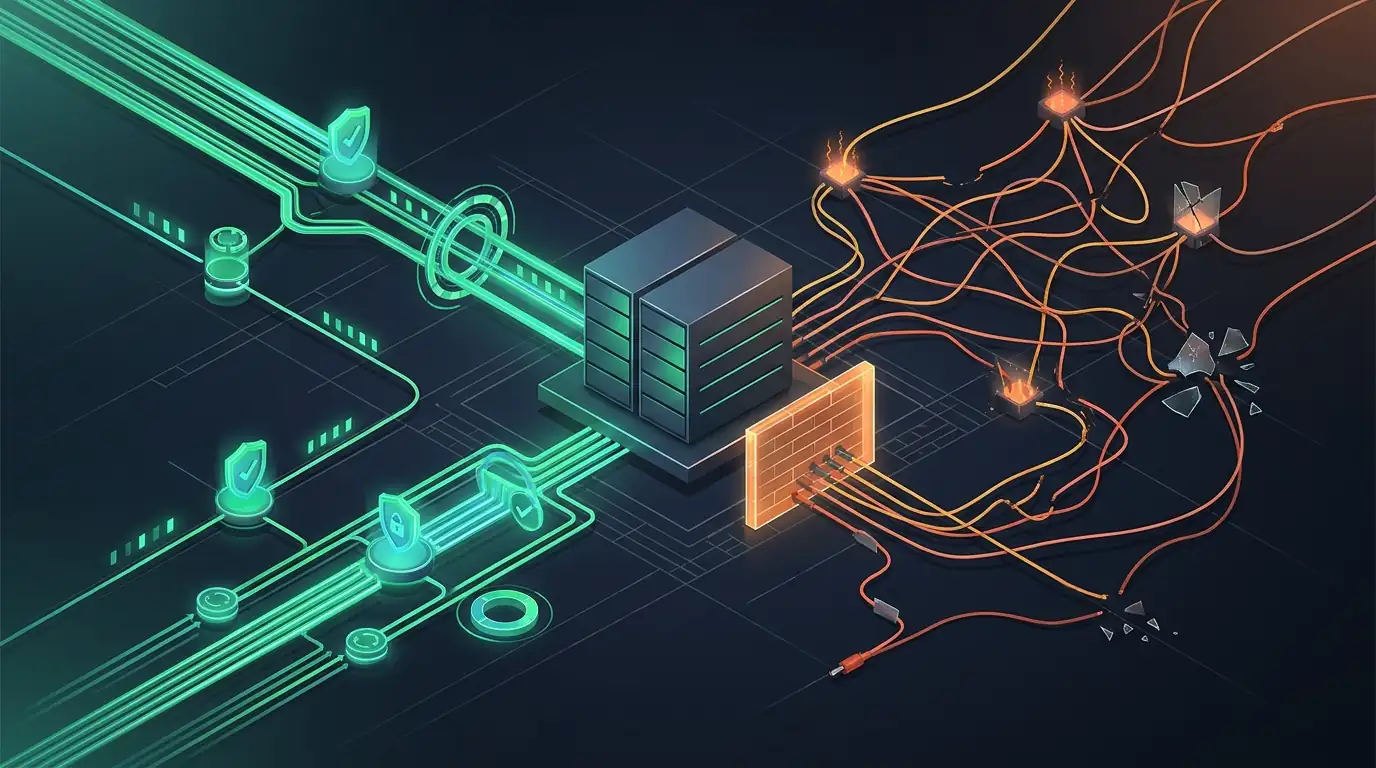
Uncoordinated reads and writes with zero concurrency control. The model queries availability and writes events directly to external calendar APIs. When two customers message concurrently, both receive the exact same slot, producing humiliating double bookings that require manual customer apologies.
Atomic holds, buffer engines and structured buttons. Slot booking operates as a managed transaction: operational buffers are enforced, temporary holds reserve the slot in Postgres for ten minutes, and final commits require verified interactive button taps from WhatsApp Cloud API webhooks.
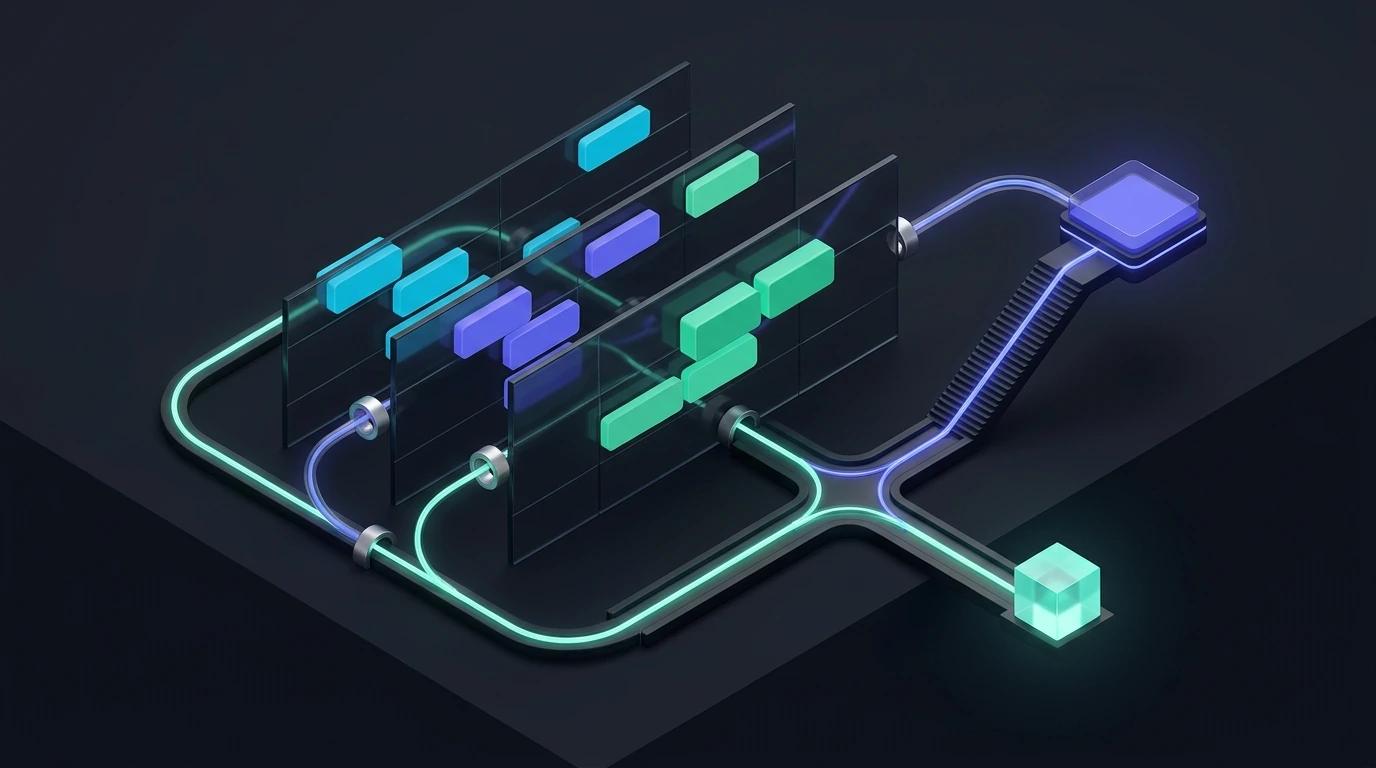
Beyond concurrency conflicts, production schedules are never just open time slots. They are governed by operational constraints: mandatory twenty-minute prep buffers between video consultations, variable driving travel windows between client sites, structured lunch blocks, and maximum daily quotas of consultations per specialist. An unconstrained language model cannot enforce these rules reliably through prompts alone.
Two-Phase Commit: Temporary Holds, Idempotency and Atomic Calendar Sync
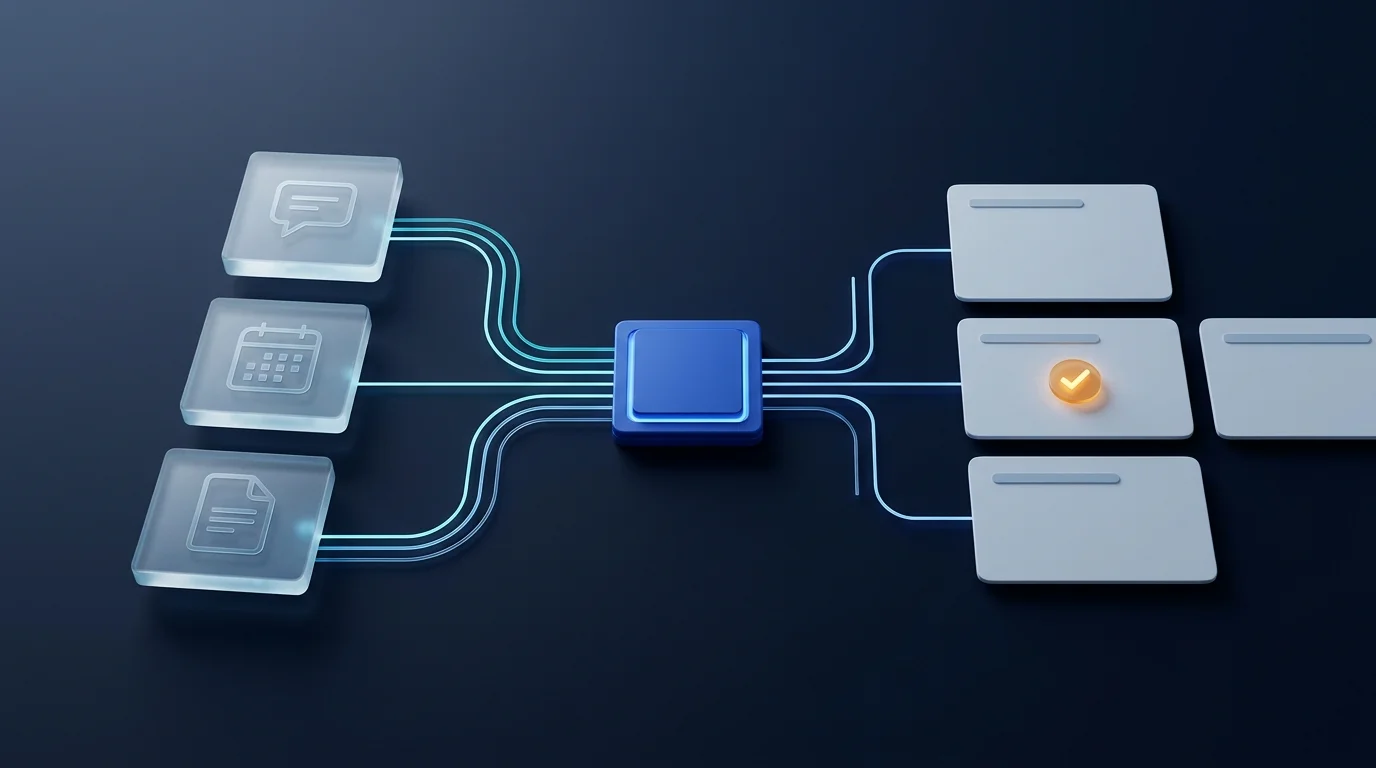
Building a dependable scheduling agent requires decoupling conversational reasoning from state persistence. Rather than letting the model speak directly to external calendars, the agent interacts with deterministic tools backed by a custom CRM and operational database that manages scheduling state:
- Multi-calendar availability and buffer validation: Upon intake, the engine queries specialist calendars and runs deterministic rule checks. It filters out conflicts, adds transit or prep buffers, and returns only three or four validated slot candidates.
- Atomic ephemeral hold with time-to-live: As the agent formats its response, the database locks candidate slots under a temporary ten-minute hold. Any concurrent conversation querying availability sees those slots as unavailable.
- Structured interactive button selection: Instead of asking open-ended questions like "Does Tuesday morning work?", the agent renders native WhatsApp Cloud API list messages or quick reply buttons. The user tap returns an immutable, unambiguous slot identifier.
- Idempotent commit and external calendar sync: The webhook event triggers an atomic database transaction: the ephemeral hold transitions to confirmed, the external calendar event is created with an idempotency key, and the client receives a structured confirmation message.
If the user does not confirm within ten minutes, the ephemeral hold expires automatically and the slot returns to the public availability pool without requiring manual calendar hygiene.
Handling Mid-Dialogue Intent Switches: Rescheduling and Hesitation
Real WhatsApp conversations rarely follow a straight path. A customer might be offered three slots for Thursday, but instead of selecting one, reply: "Actually, can we look at Friday afternoon instead? Also, my technical director needs to attend." A rigid decision-tree bot breaks down, repeating "Please choose option 1, 2 or 3" and frustrating the buyer.
To accommodate natural conversational detours, the scheduling agent maintains an adaptive context stack:
- Instant hold release on intent pivots: When a user abandons a requested timeframe, the agent immediately clears the previous ephemeral hold, preventing orphaned calendar blocks, and evaluates fresh candidates for the new timeframe.
- Side-channel data capture without workflow resets: When the customer supplies additional attendee emails, agenda notes or location preferences, the agent persists these attributes into conversation context and merges them into the final booking without restarting intake.
- Enforcing rescheduling policy boundaries: When an existing client requests to reschedule an upcoming appointment, the engine evaluates notice windows. If the request complies with advance-notice policies, the old appointment is cleanly released and replaced; if it violates cutoff windows, the agent routes the request to human dispatch.
Illustrative architectural drill: resolving a simultaneous slot contention race condition
When two inbound requests contest the same calendar opening, the database locking transaction commits the first and fails the second before sending any WhatsApp confirmation. Rather than returning a generic error, the agent immediately presents the nearest two open slots while retaining all customer details and preferences gathered so far.
Frictionless Human Handoff: Handing Off State, Not Just Conversations
High-performing automation does not attempt to resolve every edge case autonomously. Its value lies in knowing precisely when human intervention is needed and executing an orderly handover. Basic bots often state "Transferring to an agent" and drop the human operator into an unstructured wall of chat history, forcing the client to re-explain their situation from scratch.
In production custom AI agent engineering, human escalation delivers an enriched, structured handoff dossier:
Unambiguous thread ownership rule: The moment escalation triggers, the agent tags the conversation in the operations dashboard, mutes its own auto-reply pipeline, and notifies the customer that a team member is stepping in. The agent remains completely silent until an operator explicitly re-enables automation.
The operator handoff package in the team workspace provides:
- Verified customer identity and phone profile: Matching the WhatsApp phone number to the CRM record, previous engagement logs, and lifetime appointment history.
- Requested timeframe and current hold status: The exact slot the customer sought, why confirmation stalled, and which alternative options were presented.
- Specific escalation trigger: Whether the transfer stemmed from an enterprise account tag, an out-of-policy scheduling request, or an explicit customer statement such as "I want to speak with a human".
- Active WhatsApp service window: The exact hours and minutes remaining in the 24-hour Meta service window before outbound template restrictions apply.
Production Engineering Checklist for WhatsApp Schedulers
Before connecting an automated scheduling agent to an organization's primary customer line, ensure these five engineering controls are verified:
- Strict UTC normalization and timezone safety: Store all schedule timestamps in UTC within the database, converting to the customer's and specialist's local timezone only at message presentation time, with full DST transition handling.
- Calendar API webhook latency decoupling: Upstream calendar providers can take several seconds to reflect newly created appointments. An internal queue prevents race conditions caused by third-party webhook propagation lag.
- Input sanitization on participant intake: When collecting customer names, guest emails or meeting agendas, sanitize all inputs to prevent prompt injection attempts against downstream summarization models.
- Automated reminders and confirmation loops: Dispatch scheduled reminder notifications twenty-four hours and two hours prior to the appointment, offering simple one-tap confirmation or early reschedule options.
- Telemetry on booking funnels and drop-offs: Continuously monitor slot hold expirations, average time-to-confirmation, and escalation distribution to detect friction points in conversational flows.
Autonomous scheduling is a distributed state problem, not just a prompt engineering exercise.
When conversational AI is grounded in atomic slot holds, rigid operational buffer rules, and a clean human escalation pipeline, WhatsApp transforms from an uncoordinated inbox into a calm, reliable scheduling engine.