Almost every initiative to connect AI to company knowledge starts the same way: dump every document, spreadsheet export, and database table into one vector store and turn on RAG. For the first few weeks, answering handbook questions feels effortless. Then a coordinator asks how many units are free in the warehouse, whether an invoice is overdue, or which service tier applies to a branch, and semantic search returns stale chunks or confident guesswork. Choosing between RAG vs MCP tools begins by separating prose from live operational state.
Synthetic illustrative scenario: the architectural guidelines and worked example in this article describe engineering patterns for governed enterprise knowledge and AI BI systems and do not represent live customer telemetry, measured ROI, or compliance certifications.
Where Vector RAG Excels and Where It Breaks
Retrieval-Augmented Generation (RAG) bridges natural-language questions and unstructured prose. It chunks PDFs, standard operating procedures, product manuals, and framework agreements into indexed passages, ranks relevant matches, and feeds those excerpts to the model with citations. In an enterprise AI knowledge architecture, RAG excels whenever truth lives inside long-form explanations that change infrequently.
Problems emerge as soon as teams push relational data or live state into vector embeddings. Pure vector retrieval breaks down in three predictable ways:
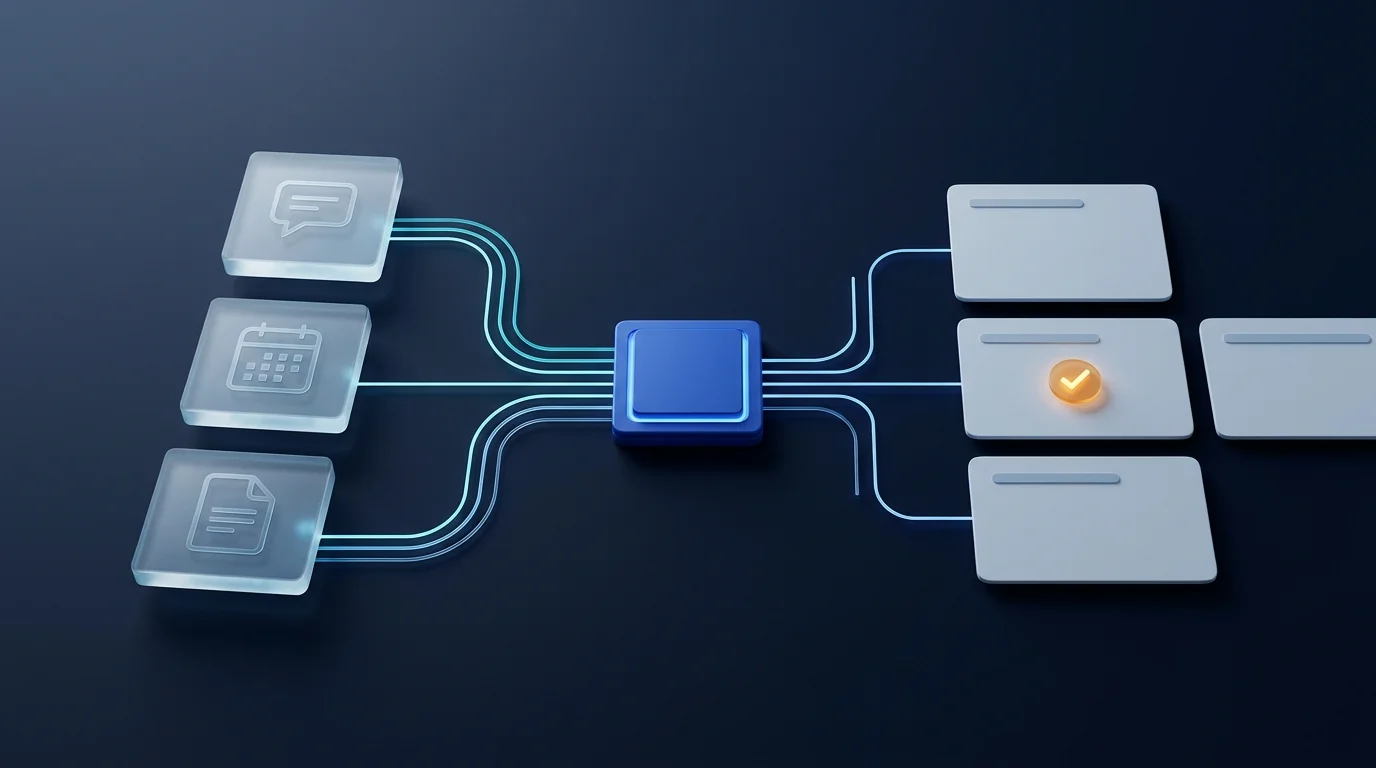
Built for policies, manuals, and prose. Finds conceptual matches across unstructured documents, handles varied phrasing, and grounds answers in cited written clauses.
Built for inventory, billing, and customer tiers. Runs schema-validated queries against live core systems under the signed-in user's permissions and returns exact current state.
- Staleness against live transactions: Warehouse stock, open tickets, credit holds, and delivery windows change every minute. Batch re-indexing always trails real operations, leaving the model unable to distinguish yesterday's snapshot from today's truth.
- Inability to aggregate, filter, or count: Top-k similarity selects a handful of nearby chunks. It cannot accurately count open orders in one region, verify whether every line item matched a shipment, or enforce strict numeric thresholds.
- Broken relational context and row permissions: Splitting exported tables into text fragments separates customer IDs from branch constraints and makes row-level authorization difficult to enforce before snippets enter the context window.
Why MCP Tool Calling Wins on Live State Without Replacing RAG
The Model Context Protocol (MCP) gives an assistant a typed catalog of domain actions rather than static text snapshots. Instead of embedding yesterday's order table, the model invokes a scoped read tool backed by your ERP, CRM, or relational database to fetch current stock counts, invoice balances, and contract tiers on demand.
Yet MCP tool calling is not a drop-in substitute for document retrieval either. Tool schemas thrive on structured parameters such as account IDs, SKUs, and date ranges. If an operations lead asks how to handle damaged pallets from a coastal supplier or wants to compare two warranty addenda, a SQL-backed tool cannot read across fifty PDF manuals or interpret nuanced phrasing. As outlined in our engineering guide to role-scoped MCP servers over Postgres, MCP works best when tools wrap well-defined business queries rather than forcing unstructured documents into rigid rows.
Combining Hybrid Search and Tool Calling in One Architecture
A dependable enterprise AI knowledge architecture stops treating RAG and MCP as competing options. Instead, it separates unstructured retrieval, live operational queries, and orchestration into three clean layers that answer both halves of a real business question together.
ACL-Filtered Hybrid Search for Documents
Combining lexical keyword matching (BM25) with dense vector search solves a common failure of pure embeddings: missing exact identifiers such as SKU codes, form numbers, and bilingual terms. Before chunks are ranked, metadata filters restrict results to documents the signed-in employee is authorized to read, preserving document title, revision date, and section anchor for clear inline citations.
Scoped MCP Tools for Live Operational State
MCP tools expose narrow read and draft capabilities backed by server-resolved session identity. Read tools query your custom AI CRM workspace, stock ledger, and support queue to return exact, verifiable fields. Any action that mutates commercial state or sends external commitments stays isolated behind separate proposal tools and explicit human sign-off.
Intent Orchestration and Source Provenance
The orchestrator splits complex questions into prose lookups and structured checks, dispatching hybrid search and tool calling in parallel when needed. Every synthesized brief separates policy citations from live system records visually so staff can audit the reasoning in seconds without opening four browser tabs.
Synthetic Walkthrough: Handling a Priority Delivery Exception
Consider an illustrative operations scenario. A support coordinator receives an urgent message from a distributor reporting a short morning shipment and asking for a same-day replacement without a second invoice, despite an open balance from last month.
- Bind session scope and extract identifiers: The assistant resolves the coordinator's permissions and extracts the account and shipment IDs without letting incoming message text override access rules.
- Check live state with deterministic MCP tools: Parallel read tools check CRM service tier, billing status, and warehouse stock. They return exact facts: the account holds priority support, the prior invoice remains within payment terms, and replacement stock is available at the main depot.
- Retrieve written rules with hybrid RAG: At the same time, ACL-filtered hybrid search pulls the fulfillment manual's exception clause on short-pick replacements and expedited courier eligibility.
- Stage a cited recommendation for human approval: The workspace displays one summary card pairing live MCP figures with the policy paragraph and revision date, letting the coordinator approve dispatch in one click.
Architecture checkpoint: what happens when a retrieved RAG policy and a live MCP record disagree?
If a PDF handbook lists a generic threshold while the CRM returns a customer exception or updated commercial rule, the orchestrator never lets the model guess. Deterministic records stay canonical for balances, stock, and tiers, and the assistant highlights the gap so operations can resolve the case and refresh the stale policy file.
Five Engineering Guardrails Before Launching Company Knowledge AI
When building custom AI workflows and knowledge systems, five boundaries keep answers dependable as documents and databases grow:
- Route sources by volatility and structure: Keep manuals, SOPs, and contracts in hybrid RAG; keep inventory, invoices, customer tiers, and schedules behind deterministic MCP tools.
- Enforce permissions prior to generation: Filter document chunks and database rows by the caller's verified identity before content enters the prompt, never via system instructions alone.
- Pair keyword search with vectors: Lexical matching catches exact SKU codes, error strings, and contract clauses that semantic similarity routinely misses.
- Expire superseded document versions: Archive outdated handbooks during ingestion so vector search cannot surface contradictory rules from last year's policy.
- Separate read retrieval from state writes: Keep knowledge retrieval read-only, following our custom AI CRM with MCP architecture, and route operational changes through human sign-off.
Reliable company AI is not a choice between RAG or MCP; it is assigning prose to search and live state to typed tools.
Combine ACL-filtered hybrid retrieval for policies with deterministic MCP queries for operational truth, keep citations visible, and give teams knowledge answers they can verify at a glance.