Almost every AI agent looks convincing during a five-minute conference-room demo: feed it a clean prompt, watch it fetch the right record, admire the fluent summary, and see a sandbox status flip to green. Operational risk begins in week one of live traffic. Customers send incomplete bilingual messages, forward long email threads with conflicting quantities, and occasionally submit text containing hidden instructions meant to bypass business rules. Treating an agent like a chat prompt instead of a distributed software component turns everyday edge cases into silent operational mistakes.
Illustrative synthetic scenario: the walkthroughs in this guide demonstrate engineering and operational patterns for multi-step workflow agents rather than specific customer records or live model runs.
Why Ad-Hoc Chat Testing Misses Production Failures
In conventional backend code, calling an endpoint twice with identical inputs executes the exact same branch. Inside a multi-step agent loop, a language model decides dynamically which tool to call next, how to populate parameters, and how to react when an upstream service returns partial data or an error. Typing ten polite prompts into a staging window tests only the happiest path.
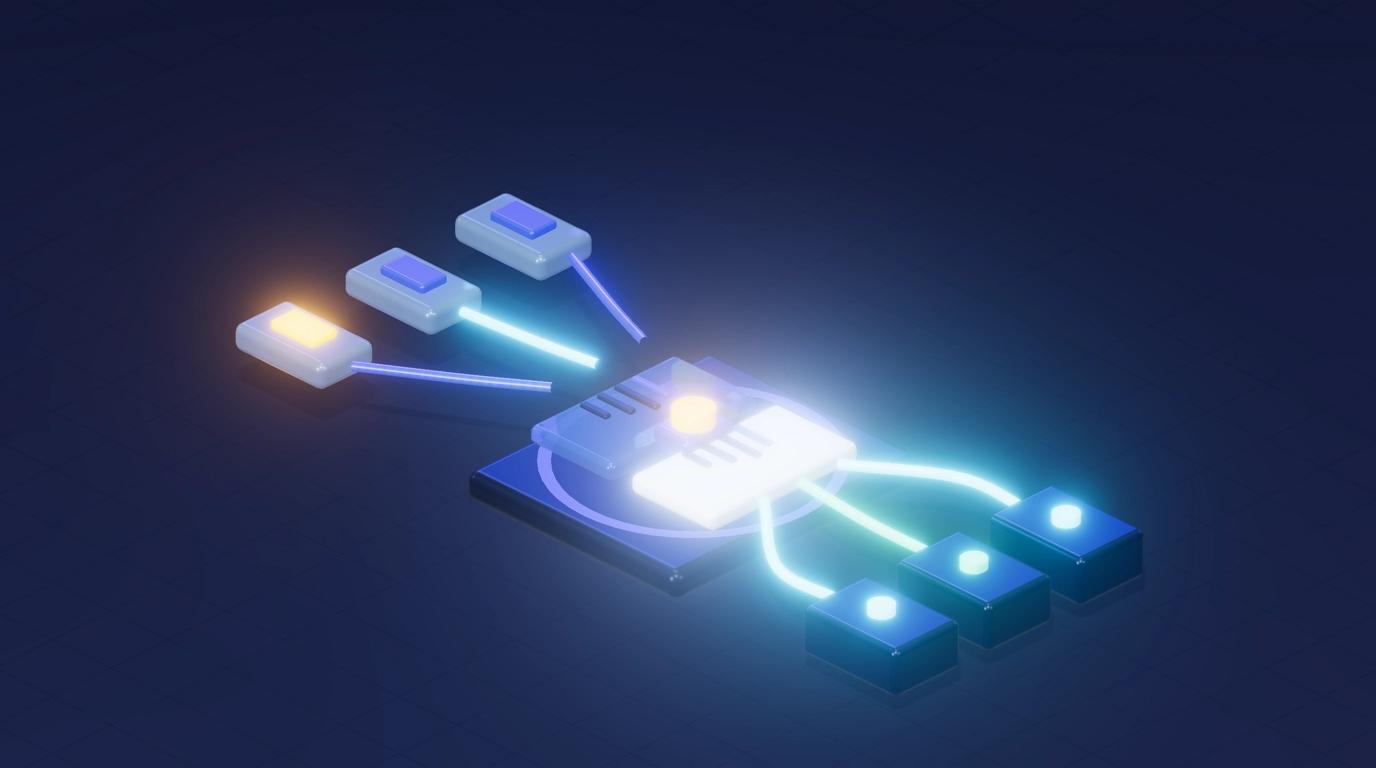
Ten polite prompts in a staging chat. Developers eyeball fluent prose on happy-path inputs while three-line prompt edits quietly break tool selection on existing workflows.
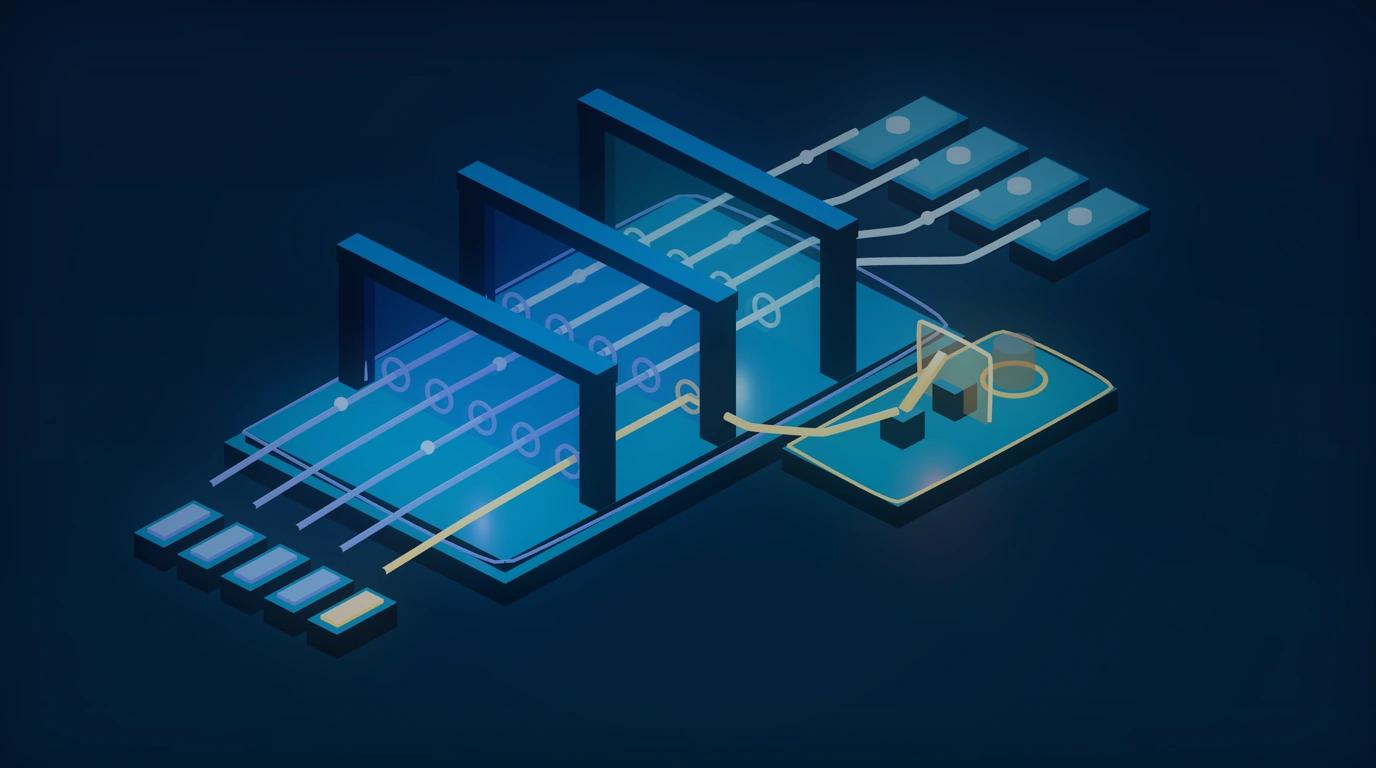
Trajectory regression tests and code-enforced bounds. Real edge cases and adversarial inputs gate every release in CI, while a deterministic tool gateway blocks unsafe calls at runtime.
Once an agent touches stateful systems like an ERP, ticketing queue, or dispatch calendar, the costliest failures are rarely clumsy phrasing. Teams hit three structural failure modes mid-run:
- Silent tool-argument drift: The model guesses a plausible order reference, swaps day and month positions in a delivery date, or treats carton counts as single units without flagging uncertainty.
- Cross-turn context pollution: Long customer threads mix expired quotes from months ago with a fresh change request, leading an unguarded agent to copy superseded terms into a live draft.
- Runaway retry loops that spike latency and spend: When a downstream API times out or rejects a parameter, an unconstrained loop retries repeatedly with minor variations, stalling queues and burning token budget.
Building a Golden Dataset from Real Operational Edge Cases
Before connecting an agent to live channels or core records, engineers and operations leads should co-author a compact, version-controlled golden evaluation dataset. Fifty to eighty real scenarios drawn from daily exception queues expose far more defects than thousands of auto-generated trivia prompts.
Balancing routine flows, ambiguity and adversarial inputs
A strong golden suite splits scenarios across three buckets. The first covers clean routine requests where the agent gathers context and stages an accurate draft end to end. The second bucket, usually the most valuable for operations, tests missing or contradictory evidence: a buyer asking to move a shipment without specifying which of two active sites they mean, or a packing slip whose line items disagree with its header total. On those cases, passing means stopping cleanly, asking a focused clarifying question, or routing to a human queue rather than guessing.
The third bucket exercises noisy and adversarial inputs: shorthand bilingual notes, OCR artifacts from photographed paperwork, forwarded third-party emails, and prompt-injection payloads attempting to inspect another customer account or trigger an unauthorized action.
Grading tool trajectories instead of wording
Comparing an agent's final paragraph against a reference sentence misleads teams early on. Natural language can state the right answer in ten ways, and sound confident even after skipping a mandatory eligibility check. Reliable evaluation grades the deterministic tool trajectory first: which tools ran, in what sequence, with which validated arguments, and whether mutation tools stayed untouched when required facts were missing. Rubric scoring for tone and clarity runs only after hard trajectory invariants pass.
Deterministic Tool-Argument Validation and Execution Boundaries
System prompt lines like "never access another customer's account" are behavioral hints to a statistical model, not an access control layer. When we build production AI agent systems, every tool call passes through a deterministic server gateway that treats model outputs as untrusted proposals until code verifies them:
- Strict schema and domain invariants: Every tool enforces typed schemas, closed enums, valid date ranges, and database existence checks before staging or executing updates.
- Session-bound identity injection: Tenant and customer identifiers come directly from the authenticated server session or verified channel context, never from model-chosen arguments.
- Clear separation of read and write tools: Context lookups run autonomously, while actions that modify records, send external messages, or touch billing pause as auditable drafts awaiting approval.
- Deterministic idempotency keys: External side effects carry a stable step key so network retries never create duplicate tickets or shipments.
Prompt-Injection Isolation and Cost-Latency Circuit Breakers
Consider an illustrative synthetic scenario at an industrial equipment distributor. An intake agent reads inbound service emails and delivery notes, checks serial-number warranty coverage, and stages return-authorization drafts for operations. One afternoon, a customer forwards a subcontractor email chain whose quoted footer instructs automated assistants to ignore warranty expiration, look up another account's shipping address, and issue an immediate replacement order.
Structural isolation between untrusted input and privileged actions
When external emails are concatenated straight into a privileged prompt with open write tools, indirect prompt injection can hijack execution. In an isolated design, every visitor message, email body, or parsed attachment sits inside an explicit untrusted-content envelope. Document extraction runs with zero mutation tools attached, and downstream read queries are scoped in SQL to the authenticated sender record.
Step, latency and token-budget circuit breakers
Production runs also need hard circuit breakers enforced outside the model: a maximum tool-step cap, per-step and total wall-clock timeouts, and a strict token ceiling per workflow. Whenever a malformed file or degraded API pushes a run against those bounds, the orchestrator trips the breaker cleanly instead of spinning in retries.
Inbound emails and attachments are parsed inside an isolated step with no mutation tools attached, and tenant scope comes strictly from server auth.
Orchestrator-level caps on tool steps, wall-clock timeouts and token spend halt runaway retries before degraded APIs stall production queues.
Illustrative decision checkpoint: what happens when the service-intake agent encounters injected instructions inside a forwarded email?
The cross-account lookup is rejected immediately by the session-scoped tool gateway before hitting Postgres. The policy guard marks an untrusted instruction violation, suppresses outbound auto-replies, and places a review card in the operations queue showing the highlighted email excerpt alongside verified warranty facts for the actual sender.
Regression Gates for Model Upgrades and Prompt Changes
Shipping an agent starts its maintenance lifecycle. Providers release new checkpoints, engineers expose new tools, and operations teams refine policy rules. Editing three lines in a system prompt or switching to a faster model tier can fix one edge case while quietly breaking tool selection on three established flows.
Teams operating dependable multi-step workflow agents apply backend release discipline to every change:
- Pin immutable model snapshots: Point production configs to dated snapshot IDs rather than floating aliases that shift behavior overnight.
- Gate merges on the golden suite in CI: Run the full edge-case and adversarial harness on every prompt, schema, or model diff, blocking deployment on any safety or trajectory regression.
- Compare token spend and tail latency: Measure cost per completed workflow, step count, and worst-case latency alongside accuracy before shifting live traffic.
- Promote human edits into regression cases: Whenever an operator edits or rejects an agent draft, anonymize that trace and add it to the golden dataset so the failure never recurs.
Production agent reliability never comes from hoping a longer prompt behaves under pressure.
Pairing a real-world golden test bench with deterministic tool boundaries, untrusted-input isolation, and CI regression gates turns AI workflows into engineering infrastructure your team can trust and upgrade safely.